
Skin Cancer Treatment: Types, Procedures, and Recovery
Introduction
Skin cancer is one of the most common forms of cancer worldwide. It develops when abnormal skin cells grow uncontrollably, often due to prolonged exposure to ultraviolet (UV) radiation from the sun or tanning devices. Early diagnosis and timely Skin Cancer Treatment can significantly improve outcomes and reduce complications.
Many people ignore unusual skin changes such as persistent sores, changing moles, or abnormal skin growths. However, these signs may indicate early skin cancer and should not be overlooked. Advances in surgical oncology, targeted therapy, immunotherapy, and minimally invasive procedures have made Skin Cancer Treatment more effective than ever before.
This article explains the different types of skin cancer, available treatment options, surgical procedures, recovery process, and when patients should seek medical attention.
What Is Skin Cancer?
Skin cancer occurs when damaged skin cells begin growing abnormally. It usually develops in areas exposed to sunlight, including:
- Face
- Neck
- Scalp
- Arms
- Hands
- Legs
However, skin cancer can also appear in areas not frequently exposed to the sun.
The severity of skin cancer depends on:
- The type of cancer
- Size of the tumor
- Depth of spread
- Whether cancer has metastasized
Early Skin Cancer Treatment often leads to excellent recovery rates.
Types of Skin Cancer
Understanding the different types helps determine the most suitable Skin Cancer Treatment plan.
Basal Cell Carcinoma (BCC)
Basal cell carcinoma is the most common type of skin cancer.
Characteristics:
- Slow-growing
- Rarely spreads to distant organs
- Often appears as a shiny bump or sore
Although less aggressive, it still requires prompt treatment.
Squamous Cell Carcinoma (SCC)
Squamous cell carcinoma develops in the outer skin layers.
Common Signs:
- Scaly patches
- Red nodules
- Non-healing sores
SCC can spread if left untreated.
Melanoma
Melanoma is the most dangerous type of skin cancer.
Warning Signs:
- Changes in mole size or color
- Irregular borders
- Bleeding or itching moles
Melanoma can spread rapidly to other organs and requires immediate Skin Cancer Treatment.
Rare Types of Skin Cancer
Less common forms include:
- Merkel cell carcinoma
- Sebaceous gland carcinoma
- Cutaneous lymphoma
Specialized diagnosis and treatment are important for these cancers.
Causes and Risk Factors for Skin Cancer
Several factors increase the risk of developing skin cancer.
Common Risk Factors
|
Risk Factor |
Explanation |
|
Excessive Sun Exposure |
UV radiation damages skin cells |
|
Fair Skin |
Lower melanin increases vulnerability |
|
Family History |
Genetic factors may contribute |
|
Weak Immune System |
Reduced ability to fight abnormal cells |
|
Tanning Beds |
Artificial UV exposure increases risk |
|
Previous Skin Cancer |
Higher chance of recurrence |
|
Older Age |
Risk increases with age |
Protecting the skin from UV exposure is one of the best preventive measures.
Symptoms of Skin Cancer
Recognizing symptoms early can lead to faster diagnosis and effective Skin Cancer Treatment.
Common Symptoms Include:
- New skin growths
- Changes in existing moles
- Bleeding or crusting lesions
- Persistent sores that do not heal
- Itching or painful skin spots
- Dark-colored patches
Patients should seek medical evaluation if any suspicious skin changes persist.
The ABCDE Rule for Melanoma Detection
Doctors often use the ABCDE rule to identify suspicious moles.
|
Letter |
Meaning |
|
A |
Asymmetry |
|
B |
Border irregularity |
|
C |
Color variation |
|
D |
Diameter larger than 6 mm |
|
E |
Evolving appearance |
Any mole showing these changes should be examined by a specialist immediately.
How Skin Cancer Is Diagnosed
Accurate diagnosis is essential before beginning Skin Cancer Treatment.
Clinical Examination
Doctors carefully inspect suspicious skin lesions.
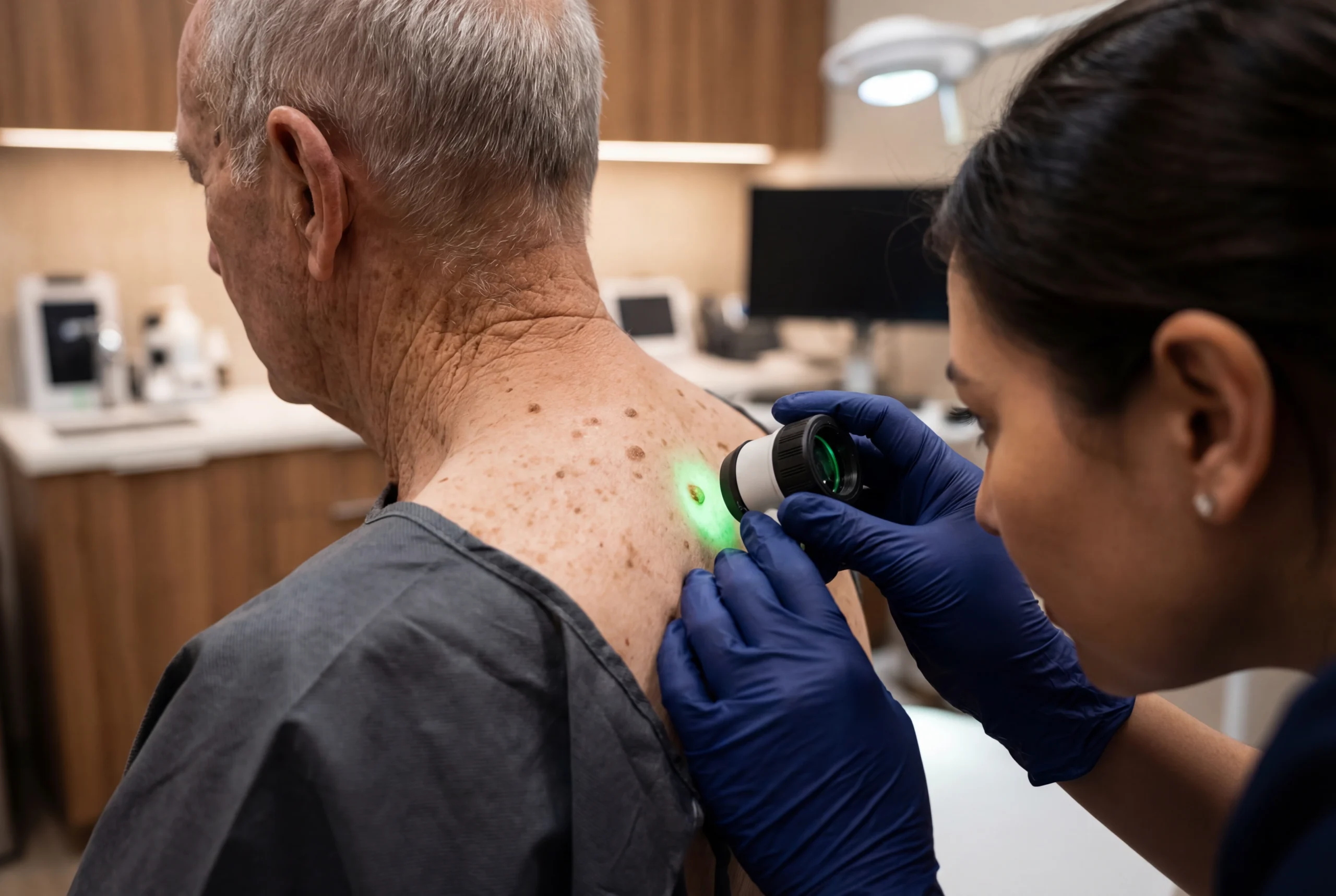
Dermoscopy
A specialized magnifying tool helps evaluate skin abnormalities.
Skin Biopsy
A tissue sample is removed and examined under a microscope.
Types of Biopsies:
- Punch biopsy
- Excisional biopsy
- Incisional biopsy
- Shave biopsy
Imaging Tests for Advanced Skin Cancer
If cancer is suspected to have spread, imaging may be recommended.
Imaging Studies May Include:
- CT Scan
- MRI Scan
- PET Scan
- Ultrasound
These scans help determine the extent of disease and guide Skin Cancer Treatment planning.
Skin Cancer Treatment Options
The choice of Skin Cancer Treatment depends on:
- Type of skin cancer
- Tumor size
- Stage of cancer
- Patient’s overall health
A personalized treatment plan often provides the best outcomes.
Surgical Skin Cancer Treatment
Surgery is one of the most effective treatments for most skin cancers.
Excisional Surgery
The tumor and a margin of healthy tissue are removed.
Benefits:
- High cure rates
- Suitable for many skin cancers
- Helps prevent recurrence
Mohs Micrographic Surgery
This advanced procedure removes cancer layer by layer while preserving healthy skin.
This advanced procedure removes cancer layer by layer while preserving healthy skin.
Advantages:
- Maximum tissue preservation
- High success rate
- Excellent cosmetic results
Mohs surgery is commonly used for:
- Facial skin cancers
- Recurrent tumors
- Large or aggressive cancers
Curettage and Electrodesiccation
The tumor is scraped away and destroyed using electric current.
This method is often used for:
- Small basal cell carcinomas
- Superficial skin cancers
Radiation Therapy for Skin Cancer
Radiation therapy uses targeted high-energy rays to destroy cancer cells.
Radiation May Be Recommended:
- After surgery
- For patients who cannot undergo surgery
- For advanced skin cancers
Modern techniques help minimize damage to surrounding tissues.
Chemotherapy for Skin Cancer
Chemotherapy may be used for advanced or metastatic skin cancer.
Types of Chemotherapy:
- Topical chemotherapy creams
- Intravenous chemotherapy drugs
Chemotherapy helps destroy rapidly growing cancer cells.
Immunotherapy for Skin Cancer
Immunotherapy has revolutionized advanced Skin Cancer Treatment, especially for melanoma.
How Immunotherapy Works
These medications help the immune system recognize and attack cancer cells.
Benefits:
- Improved survival rates
- Effective in advanced melanoma
- Long-term cancer control in some patients
Immunotherapy may be combined with surgery or radiation therapy.
Targeted Therapy for Skin Cancer
Targeted therapy attacks specific genetic mutations found in cancer cells.
It is especially useful for:
- Advanced melanoma
- Metastatic skin cancer
These therapies often cause fewer side effects compared to traditional chemotherapy.
Recovery After Skin Cancer Treatment
Recovery varies depending on:
- Type of procedure
- Cancer stage
- Overall health
Most patients recover well with proper follow-up care.
What to Expect During Recovery
After Surgery
Patients may experience:
- Mild pain
- Swelling
- Scarring
- Temporary discomfort
Proper wound care supports healing.
Emotional Recovery
A cancer diagnosis can affect mental health.
Patients may benefit from:
- Emotional support
- Counseling
- Support groups
- Open communication with healthcare providers
Follow-Up Care After Skin Cancer Treatment
Regular follow-up is important because skin cancer can recur.
Follow-Up May Include:
- Skin examinations
- Imaging tests
- Biopsies if needed
- Monitoring for recurrence
Patients with previous skin cancer should continue lifelong skin monitoring.
Tips to Prevent Skin Cancer
Preventive measures can significantly reduce risk.
Skin Protection Tips
- Use sunscreen daily
- Avoid excessive sun exposure
- Wear protective clothing
- Avoid tanning beds
- Perform regular skin self-examinations
Early prevention supports long-term skin health.
When to Seek Medical Help
Patients should consult a doctor immediately if they notice:
- A changing mole
- Non-healing skin sores
- Persistent itching or bleeding lesions
- Rapidly growing skin lumps
- Unusual skin discoloration
Delaying evaluation may allow cancer to spread and complicate Skin Cancer Treatment.
Importance of Early Detection
Early diagnosis improves treatment success and reduces the need for aggressive procedures.
Benefits of Early Detection:
- Higher cure rates
- Smaller surgeries
- Reduced complications
- Better cosmetic outcomes
- Lower recurrence risk
Routine skin examinations are especially important for high-risk individuals.
Why Choose Dr. Sachin Trivedi for Skin Cancer Treatment?
Dr. Sachin Trivedi offers comprehensive cancer evaluation and advanced surgical treatment approaches tailored to individual patient needs. With expertise in modern oncological procedures and multidisciplinary cancer care, patients receive accurate diagnosis, evidence-based treatment, and compassionate support throughout recovery.
A patient-centered approach ensures that every treatment plan focuses on both cancer control and quality of life.
Conclusion
Skin cancer is a serious but highly treatable condition when diagnosed early. Recognizing warning signs such as changing moles, non-healing sores, or unusual skin lesions can lead to earlier intervention and better outcomes.
Modern Skin Cancer Treatment options, including surgery, immunotherapy, radiation therapy, and targeted therapy, have significantly improved recovery and survival rates. Seeking prompt medical care and maintaining regular follow-up can help patients achieve the best possible results.
If you notice suspicious skin changes or persistent skin problems, consult an experienced specialist for timely evaluation and personalized Skin Cancer Treatment.