
Targeted Therapy for Myeloma: How Modern Treatments Are Changing Lives
Introduction
Multiple myeloma is a complex blood cancer that develops in plasma cells, a type of white blood cell responsible for producing antibodies. Over the last two decades, advancements in cancer treatment have transformed the outlook for patients diagnosed with this disease. One of the most significant breakthroughs has been the development of targeted therapy for myeloma, a treatment approach designed to attack cancer cells more precisely while minimizing damage to healthy tissues.
Today, targeted therapies are helping patients live longer, experience fewer symptoms, and maintain a better quality of life than ever before. Understanding how targeted therapy for myeloma works can help patients and their families make informed decisions about treatment.
What Is Multiple Myeloma?
Multiple myeloma is a cancer that begins in plasma cells found within the bone marrow. In healthy individuals, plasma cells help fight infections by producing antibodies. However, in multiple myeloma, abnormal plasma cells grow uncontrollably and crowd out healthy blood-forming cells.
This can lead to several complications, including:
- Bone pain and fractures
- Anemia
- Kidney damage
- Frequent infections
- Fatigue
- High calcium levels in the blood
Although multiple myeloma is generally considered a chronic and relapsing cancer, modern treatment strategies, including targeted therapy for myeloma, have significantly improved patient outcomes.
What Is Targeted Therapy for Myeloma?
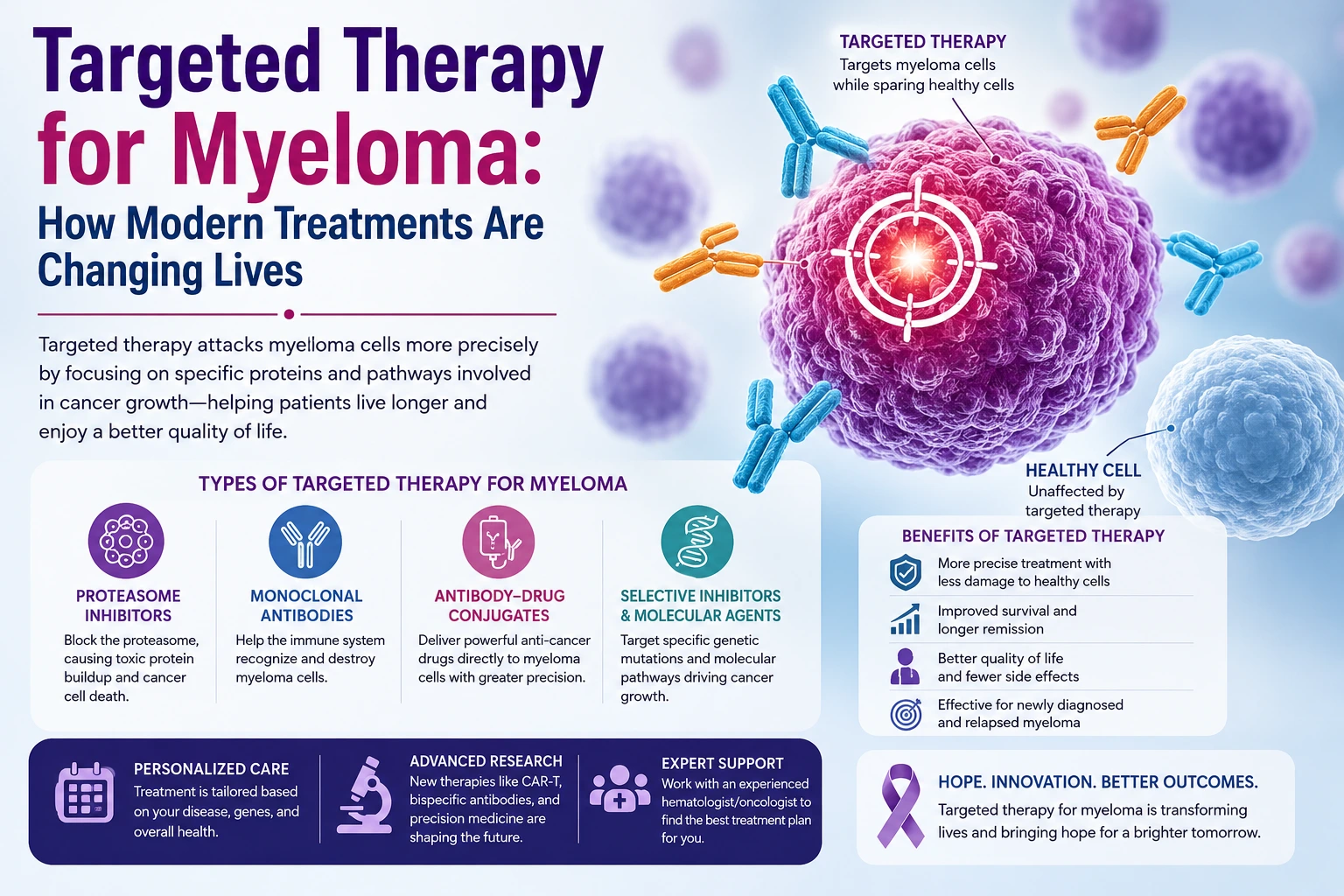
Targeted therapy for myeloma refers to medications that specifically identify and attack certain proteins, pathways, or mechanisms that help myeloma cells survive and multiply.
Unlike traditional chemotherapy, which affects both cancerous and healthy cells, targeted therapies are designed to focus on specific molecular targets associated with cancer growth.
Benefits of Targeted Therapy
Some major advantages include:
- More precise treatment
- Reduced damage to healthy cells
- Better disease control
- Improved progression-free survival
- Enhanced quality of life
- Effective treatment for relapsed disease
- Often used in combination with other therapies
The development of targeted therapies has fundamentally changed the treatment landscape for multiple myeloma.
How Does Targeted Therapy for Myeloma Work?
Myeloma cells rely on various cellular pathways and proteins to grow and avoid destruction by the immune system.
Targeted therapies work by:
- Blocking cancer cell growth signals
- Triggering cancer cell death
- Enhancing immune system recognition
- Preventing tumor spread
- Disrupting protein processing inside cancer cells
Because they interfere with specific cancer mechanisms, these therapies can be highly effective even when standard treatments become less successful.
Types of Targeted Therapy for Myeloma
Several categories of targeted therapies are currently used to treat multiple myeloma.
1. Proteasome Inhibitors
Proteasomes are structures inside cells that break down unwanted proteins. Myeloma cells produce large amounts of abnormal proteins and depend heavily on proteasomes for survival.
Proteasome inhibitors block this process, causing toxic protein accumulation within cancer cells.
Common examples include:
- Bortezomib
- Carfilzomib
- Ixazomib
Benefits
- Effective in newly diagnosed patients
- Useful in relapsed myeloma
- Often combined with immunotherapy
- Improves treatment response rates
2. Monoclonal Antibodies
Monoclonal antibodies are laboratory-produced proteins designed to recognize specific markers on myeloma cells.
These medications help the immune system identify and destroy cancer cells.
Examples include:
- Daratumumab
- Isatuximab
- Elotuzumab
How They Work
Monoclonal antibodies:
- Bind directly to cancer cells
- Recruit immune cells to attack tumors
- Enhance immune responses
- Promote cancer cell destruction
These therapies have become an important component of modern targeted therapy for myeloma treatment plans.
3. Antibody-Drug Conjugates (ADCs)
Antibody-drug conjugates combine targeted antibodies with powerful anti-cancer drugs.
The antibody delivers the medication directly to myeloma cells, reducing exposure to healthy tissues.
Advantages
- Greater treatment precision
- Reduced systemic toxicity
- Effective against resistant disease
- Improved response in relapsed patients
This approach represents one of the newest advancements in targeted cancer treatment.
4. Selective Inhibitors and Molecular Targeted Agents
Researchers have identified several genetic and molecular abnormalities that drive myeloma growth.
New therapies are designed to inhibit these pathways directly.
Potential targets include:
- BCL-2 proteins
- Cell signaling pathways
- Growth factor receptors
- Genetic mutations
As precision medicine evolves, these therapies are becoming increasingly personalized.
Targeted Therapy vs Chemotherapy
Many patients wonder how targeted therapy differs from traditional chemotherapy.
Feature | Targeted Therapy | Chemotherapy |
Action | Targets specific cancer pathways | Attacks rapidly dividing cells |
Precision | High | Lower |
Effect on Healthy Cells | Less | More |
Side Effects | Often fewer | Often broader |
Personalized Treatment | Yes | Limited |
Long-Term Disease Control | Improved | Variable |
While chemotherapy still plays an important role in multiple myeloma treatment, targeted therapies have significantly expanded treatment options.
Who May Benefit from Targeted Therapy for Myeloma?
Targeted therapy may be recommended for:
- Newly diagnosed patients
- Relapsed multiple myeloma
- Refractory myeloma
- Patients unable to tolerate intensive chemotherapy
- Individuals undergoing stem cell transplantation
- High-risk disease cases
Treatment decisions depend on several factors, including age, overall health, genetic profile, and previous treatments.
Combination Treatment Approaches
Modern myeloma care rarely relies on a single treatment.
Targeted therapies are frequently combined with:
- Immunotherapy
- Corticosteroids
- Chemotherapy
- Stem cell transplantation
- Supportive care treatments
Common goals include:
- Achieving remission
- Delaying disease progression
- Reducing symptoms
- Extending survival
Combination therapy often produces stronger and more durable responses than single-agent treatment.
Benefits of Targeted Therapy for Myeloma
The introduction of targeted therapies has revolutionized multiple myeloma management.
Key Benefits
Improved Survival
Many patients now live significantly longer than in previous decades due to advancements in targeted treatments.
Better Disease Control
Targeted therapies help suppress cancer growth and delay relapse.
Reduced Hospitalizations
Effective disease control often results in fewer complications and hospital admissions.
Enhanced Quality of Life
Patients frequently experience:
- Less pain
- Improved energy levels
- Better mobility
- Greater independence
Personalized Treatment
Doctors can increasingly tailor therapy based on individual disease characteristics.
Possible Side Effects of Targeted Therapy
Although targeted therapies are generally more precise than chemotherapy, side effects can still occur.
Common side effects may include:
Proteasome Inhibitors
Nerve damage (neuropathy)
Fatigue
Low blood counts
Digestive issues
Monoclonal Antibodies
Infusion-related reactions
Fever
Chills
Shortness of breath
General Side Effects
Increased infection risk
Fatigue
Nausea
Diarrhea
Skin reactions
Most side effects can be managed effectively through close monitoring and supportive care.
The Role of Precision Medicine in Myeloma Treatment
One of the most exciting developments in oncology is precision medicine.
Precision medicine allows doctors to analyze:
- Genetic mutations
- Molecular markers
- Tumor characteristics
- Treatment response patterns
This information helps identify which targeted therapy for myeloma is most likely to benefit a specific patient.
As research advances, treatment is becoming increasingly individualized.
Future of Targeted Therapy for Myeloma
Research in multiple myeloma continues to evolve rapidly.
Emerging innovations include:
CAR-T Cell Therapy
Engineered immune cells are modified to recognize and attack myeloma cells.
Bispecific Antibodies
These therapies connect immune cells directly to cancer cells, enhancing tumor destruction.
Novel Molecular Targets
Researchers continue identifying new pathways that may lead to even more effective treatments.
Personalized Cancer Vaccines
Future therapies may help train the immune system to prevent disease recurrence.
These developments offer hope for even better outcomes in the years ahead.
Living with Multiple Myeloma During Treatment
Successful treatment involves more than medication alone.
Patients are encouraged to:
- Attend regular follow-up appointments
- Maintain a healthy diet
- Stay physically active when possible
- Manage stress effectively
- Report side effects promptly
- Follow prescribed treatment schedules
A comprehensive care approach can improve both treatment outcomes and overall well-being.
When Should You Consult a Cancer Specialist?
Early diagnosis and expert treatment planning are essential.
Seek medical attention if you experience:
- Persistent bone pain
- Frequent infections
- Unexplained fatigue
- Recurrent fractures
- Kidney problems
- Elevated calcium levels
- Abnormal blood test results
An experienced hematologist or Medical Oncologist in Mumbai can determine whether targeted therapy may be appropriate.
Frequently Asked Questions
Is targeted therapy for myeloma a cure?
While targeted therapy is not typically considered a cure, it can provide long-term disease control, improve survival, and help patients maintain a good quality of life.
Is targeted therapy better than chemotherapy?
Targeted therapy and chemotherapy serve different purposes. In many cases, targeted therapies offer greater precision and fewer side effects, but treatment plans often combine multiple approaches.
How long does targeted therapy treatment last?
Treatment duration varies based on disease stage, response, and overall treatment goals. Some patients remain on therapy for extended periods.
Can targeted therapy be used after relapse?
Yes. Many targeted therapies are specifically effective for relapsed or refractory multiple myeloma.
What is the success rate of targeted therapy for myeloma?
Success depends on several factors, including disease biology, stage, and overall health. However, targeted therapies have significantly improved response rates and survival outcomes.
Conclusion
Targeted therapy for myeloma has transformed the way multiple myeloma is treated. By focusing on specific cancer pathways and cellular mechanisms, these innovative therapies provide more precise and effective treatment options than ever before. From proteasome inhibitors and monoclonal antibodies to emerging precision medicine approaches, targeted treatments are helping patients live longer, manage symptoms more effectively, and enjoy a better quality of life.
As research continues to advance, the future of multiple myeloma treatment looks increasingly promising. For patients diagnosed with this condition, consulting an experienced Medical Oncologist in Mumbai can help determine the most effective personalized treatment strategy and ensure access to the latest therapeutic advances.