
Signs and Symptoms of Breast Cancer: Early Warning Signs to Know
Introduction
Breast cancer develops when abnormal cells in the breast grow uncontrollably. It can affect people of different ages, although the risk generally increases with age. Recognising the signs and symptoms of breast cancer is important because early disease may not always cause noticeable changes.
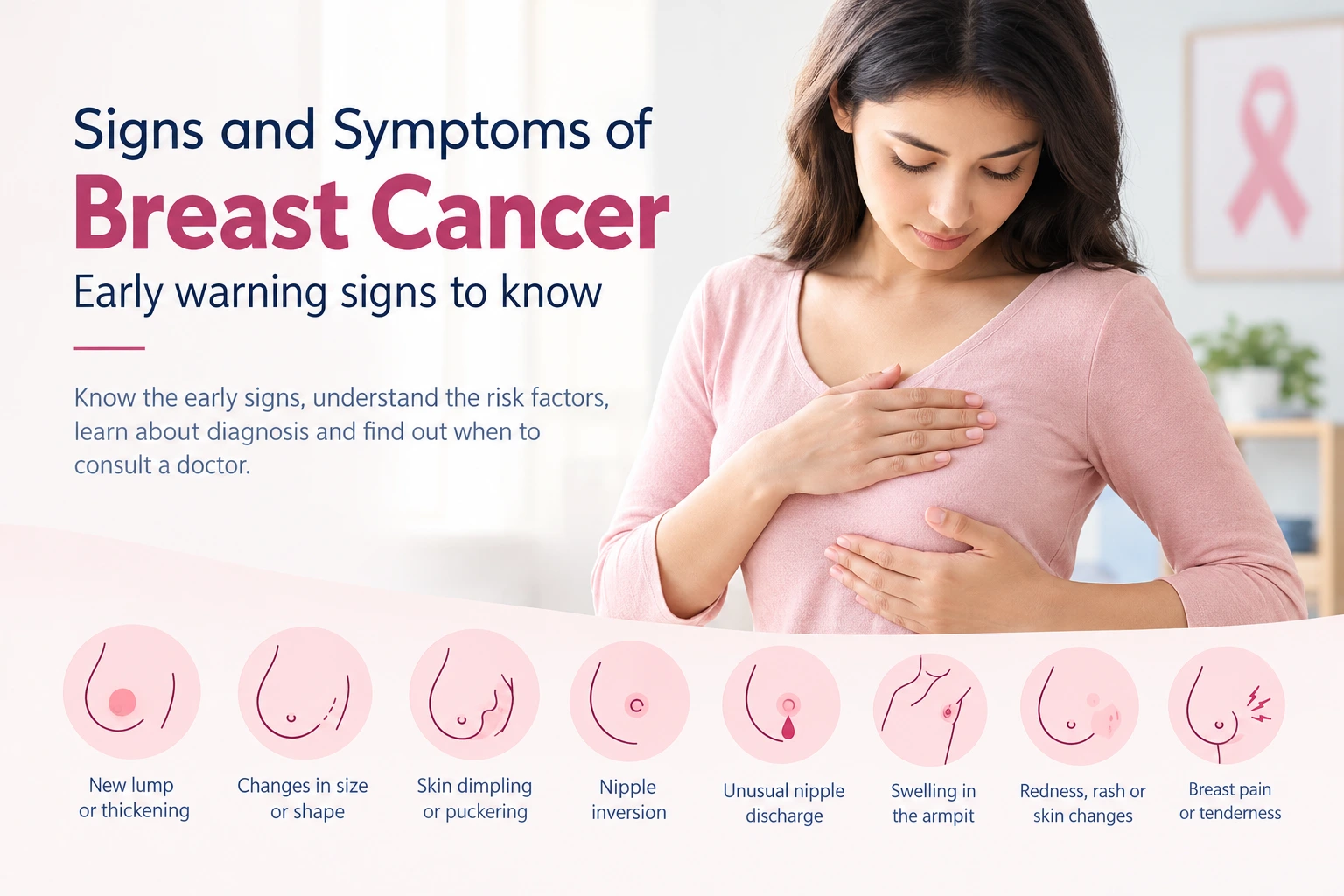
The most common symptom is a new lump or thickened area in the breast. Other possible warning signs include changes in breast size or shape, skin dimpling, nipple inversion, unusual nipple discharge, and swelling in the armpit. However, many breast changes are caused by non-cancerous conditions.
Understanding what to look for can help people seek medical evaluation without unnecessary fear or delay. This article explains the early symptoms of breast cancer, less common warning signs, risk factors, diagnostic tests, and when to consult a doctor.
What Are the Early Signs and Symptoms of Breast Cancer?
The early signs and symptoms of breast cancer vary from person to person. Some people notice a lump, while others experience changes in the skin, nipple, or overall appearance of the breast. In some cases, breast cancer is detected through screening before symptoms develop.
Common warning signs include:
- A new lump or thickening in the breast.
- A change in the size or shape of one breast.
- Dimpling, puckering, or thickening of the breast skin.
- A nipple that turns inward unexpectedly.
- Unusual nipple discharge, particularly if bloody.
- Swelling or a lump in the armpit.
- Persistent changes in the nipple or surrounding skin.
These changes do not necessarily indicate cancer. Nevertheless, any new or unusual breast change should be assessed by a qualified healthcare professional.
1. Breast Lump or Thickening
A new lump in the breast is one of the most recognised signs of breast cancer. It may feel like a firm or hard area that is different from the surrounding tissue.
A lump associated with cancer may be painless, but it can also be tender or painful. Its texture and mobility alone cannot reliably determine whether it is cancerous.
Breast lumps can also result from benign conditions such as breast cysts, fibroadenomas, hormonal changes, or infections.
When to seek medical advice: Consult a doctor if you discover a new lump or persistent area of thickening in your breast or armpit, even if it does not hurt.
2. Changes in Breast Size or Shape
A noticeable change in the size, shape, or contour of one breast can sometimes be a symptom of breast cancer.
Although some natural differences between breasts are common, a newly developed asymmetry or unexplained swelling deserves attention.
Possible changes include:
- Enlargement or swelling of one breast.
- A newly noticeable difference between the breasts.
- Changes in the breast’s contour.
- An area that appears pulled inward or distorted.
These changes can have several causes, including hormonal fluctuations and benign breast conditions. A doctor can assess whether further investigations are needed.
3. Skin Dimpling or Puckering
Breast cancer may cause changes in the skin covering the breast. The skin may appear indented, puckered, or pulled inward.
In some cases, the skin develops an orange-peel appearance, medically known as peau d’orange. This occurs when the skin becomes thickened and its pores appear more prominent.
Such changes may occur when cancer affects the tissues beneath the skin or interferes with lymphatic drainage.
Look for:
- New dimples or indentations.
- Skin that appears pulled or wrinkled.
- Thickened skin with an orange-peel texture.
- Persistent swelling or changes in skin texture.
New skin changes should be assessed, particularly if they affect one breast or develop quickly.
4. Nipple Changes
Changes in the nipple can sometimes be associated with breast cancer. One possible warning sign is a nipple that begins to turn inward when it previously pointed outward.
Other changes may include:
- A change in the nipple’s shape or direction.
- Persistent redness or scaling around the nipple.
- Crusting or a sore that does not heal.
- Thickening or other unusual changes in the nipple skin.
Some people naturally have inverted nipples. The concern is a new or unexplained change, especially when accompanied by other symptoms.
Persistent nipple changes should be evaluated by a healthcare professional.
5. Unusual Nipple Discharge
Nipple discharge refers to fluid that comes out of the nipple without being breast milk during breastfeeding.
Although discharge is often caused by non-cancerous conditions, certain patterns require medical evaluation. These include spontaneous discharge, discharge from only one breast, or discharge that contains blood.
Possible causes include hormonal changes, benign growths in the milk ducts, infections, and, less commonly, breast cancer.
Do not attempt to diagnose the cause based on the colour or appearance of the fluid alone. A doctor can determine whether examination and imaging are necessary.
6. Swelling or a Lump in the Armpit
Lymph nodes are small structures that help the immune system respond to infections and other conditions. Some lymph nodes are located in the armpit and near the collarbone.
Breast cancer can spread to nearby lymph nodes, sometimes causing swelling or a lump before the breast tumour becomes easy to feel.
However, swollen lymph nodes are also common during infections and other non-cancerous conditions.
Seek medical assessment if you notice a new or persistent lump in the armpit or near the collarbone, particularly alongside breast changes.
7. Breast Pain or Tenderness
Breast pain is common and is not usually caused by breast cancer when it occurs on its own.
Pain may be related to menstrual cycle changes, pregnancy, breastfeeding, cysts, medication effects, or inflammation.
However, breast cancer can sometimes cause pain or tenderness. Persistent, localised pain, especially when accompanied by a lump, skin changes, or nipple abnormalities, should be evaluated.
The absence of pain does not rule out breast cancer, and pain alone does not establish a cancer diagnosis.
8. Redness, Rash, or Thickening of the Breast Skin
Persistent redness, irritation, scaling, or thickening of the breast skin can have several causes, including infection, eczema, and other inflammatory conditions.
A less common but important form of breast cancer, called inflammatory breast cancer, may cause rapid breast swelling, redness, warmth, and skin thickening. It may not produce a clearly defined lump.
These symptoms can resemble a breast infection. However, rapid or persistent changes should receive prompt medical attention, especially if they do not improve as expected with treatment.
9. Symptoms of Advanced Breast Cancer
If breast cancer spreads beyond the breast and nearby lymph nodes to other parts of the body, it is known as metastatic breast cancer.
Symptoms depend on the organs affected and may include:
Symptom | Possible association |
Persistent bone pain | Possible involvement of the bones |
Ongoing cough or breathlessness | Possible involvement of the lungs |
Persistent abdominal discomfort or swelling | Possible involvement of the liver or other abdominal structures |
Severe or persistent headaches | Possible involvement of the brain or another neurological condition |
Unexplained weight loss or fatigue | May occur with advanced illness or other conditions |
These symptoms are not specific to breast cancer. They can occur with many other medical conditions and require assessment based on the person’s overall health and medical history.
Breast Cancer Symptoms: Quick Reference Table
Sign or symptom | What to look for |
Breast lump | A new lump or firm area in the breast |
Breast size or shape changes | New swelling, distortion, or asymmetry |
Skin dimpling | Indentations or puckering |
Nipple inversion | A nipple that newly turns inward |
Nipple discharge | Spontaneous or bloody discharge |
Armpit swelling | A new or persistent lump near the armpit |
Skin changes | Redness, thickening, scaling, or orange-peel texture |
Breast pain | Persistent or localised pain, especially with other changes |
Not everyone with breast cancer experiences these symptoms. Some cancers are detected through screening before a person notices a change.
What Are the Risk Factors for Breast Cancer?
Breast cancer can develop in people with or without recognised risk factors. Having a risk factor does not mean someone will necessarily develop the disease.
Factors associated with an increased risk include:
- Age: Risk generally increases as people get older.
- Family history: Having close relatives with breast or certain other cancers may increase risk.
- Inherited genetic variants: Changes in genes such as BRCA1 and BRCA2 can increase susceptibility.
- Personal history: Previous breast cancer or certain high-risk breast conditions can increase future risk.
- Hormonal and reproductive factors: Some patterns of lifetime hormone exposure are associated with risk.
- Previous radiation exposure: Radiation treatment involving the chest at a young age can increase risk.
- Lifestyle factors: Alcohol consumption, physical inactivity, and excess body weight after menopause can contribute to risk.
People with a strong family history or known inherited genetic risk may benefit from a personalised risk assessment and guidance on appropriate surveillance.
How Is Breast Cancer Diagnosed?
If a breast change is identified, a doctor may recommend one or more investigations. The tests depend on the person’s age, symptoms, medical history, and examination findings.
1. Clinical Breast Examination
A healthcare professional examines the breasts, nipples, and nearby lymph node areas for lumps or unusual changes.
2. Mammography
A mammogram is an X-ray examination of the breast. Diagnostic mammography may be recommended when symptoms or examination findings require further assessment. Screening mammography is used to look for breast cancer in people who do not have symptoms, according to the applicable screening recommendations.
3. Breast Ultrasound
Ultrasound uses sound waves to create images of breast tissue. It can help assess a lump and distinguish between fluid-filled cysts and solid areas.
It may be used alongside mammography, depending on the clinical situation.
4. Breast MRI
Magnetic resonance imaging (MRI) may be recommended in selected cases, including certain high-risk individuals or situations in which additional imaging information is needed.
MRI is not necessary for every person with a breast lump.
5. Breast Biopsy
A biopsy involves collecting a tissue sample for examination under a microscope. When imaging or examination findings are suspicious, a biopsy may be required to establish whether cancer is present and identify its type.
Not every breast lump requires a biopsy; the decision depends on the findings of the clinical assessment and imaging.
How Can You Monitor Breast Health?
Being familiar with how your breasts normally look and feel can help you notice unusual changes.
Consider the following practices:
- Pay attention to new lumps, swelling, or changes in breast shape.
- Notice changes in the nipples or the surrounding skin.
- Seek medical advice about persistent or unexplained changes.
- Follow screening recommendations appropriate to your age and individual risk.
- Discuss a strong family history of breast or ovarian cancer with a healthcare professional.
Breast awareness does not replace recommended screening or a clinical examination. Do not delay an assessment because a recent screening test was normal if a new symptom develops.
When Should You Consult a Doctor?
Arrange a medical appointment if you notice:
- A new breast or armpit lump.
- Unexplained changes in breast size or shape.
- New nipple inversion or unusual discharge.
- Skin dimpling, persistent redness, or thickening.
- A sore or rash on the nipple that does not heal.
- Persistent or unexplained breast pain.
Seek prompt medical assessment for rapidly developing breast redness, swelling, warmth, or skin changes. These symptoms may be caused by infection or other conditions, but they should not be ignored.
A breast change does not automatically mean cancer. Timely evaluation helps identify the cause and determine whether treatment or further testing is needed.
Frequently Asked Questions
What is the most common sign of breast cancer?
A new lump or mass in the breast is the most common recognised symptom. However, some breast cancers cause skin changes, nipple abnormalities, or swelling without a clearly noticeable lump.
Can breast cancer occur without a lump?
Yes. Some breast cancers may cause changes in breast skin, nipple appearance, or breast size without producing an easily felt lump. Others may be detected through screening before symptoms develop.
Is breast cancer painful in the early stages?
Breast cancer does not usually cause pain in its early stages, but pain can occur. A painless lump can be a warning sign, so the absence of pain should not be used to rule out cancer.
Can men develop breast cancer?
Yes. Breast cancer can occur in men, although it is much less common than in women. Possible symptoms include a lump in the chest, nipple changes, unusual discharge, or a lump in the armpit. New or unexplained changes should be assessed by a healthcare professional.
Does every breast lump mean cancer?
No. Many breast lumps are caused by non-cancerous conditions, including cysts and fibroadenomas. Nevertheless, a new lump should be examined to determine its cause.
Can breast cancer be detected before symptoms appear?
Yes. Screening mammography can detect some breast cancers before a person notices symptoms. The appropriate screening approach depends on age, individual risk, and applicable medical recommendations.
Conclusion
The signs and symptoms of breast cancer can vary widely. A new breast lump is a common warning sign, but other changes, including skin dimpling, nipple inversion, unusual discharge, breast swelling, and a lump in the armpit, also require attention.
Many breast changes are caused by non-cancerous conditions, so symptoms alone cannot establish a diagnosis. Being familiar with your usual breast appearance, following appropriate screening recommendations, and seeking medical evaluation for new or persistent changes are important steps in maintaining breast health.
Medical Disclaimer: This article is intended for general educational purposes and does not replace professional medical advice, diagnosis, or treatment. Consult a qualified healthcare professional if you notice any unusual breast changes or have concerns about your breast health.
Contact Details:
Dr. Sachin Trivedi
Oncologist in Mumbai | Cancer specialist in Mumbai
Address: Bldg No. 38, N S Patkar Marg, opp. Westside, Babulnath, Dadi Sheth Wadi, Gamdevi, Mumbai, Maharashtra 400007
Phone: 83696 95209
Website: drsachintrivedi.com