
What Is the First Sign of Liver Cancer? Early Symptoms to Know
Introduction
Liver cancer is a condition in which abnormal cells grow uncontrollably in the liver. Recognising possible warning signs can help people seek medical evaluation when necessary. However, one of the challenges with liver cancer is that it may not cause noticeable symptoms during its early stages.
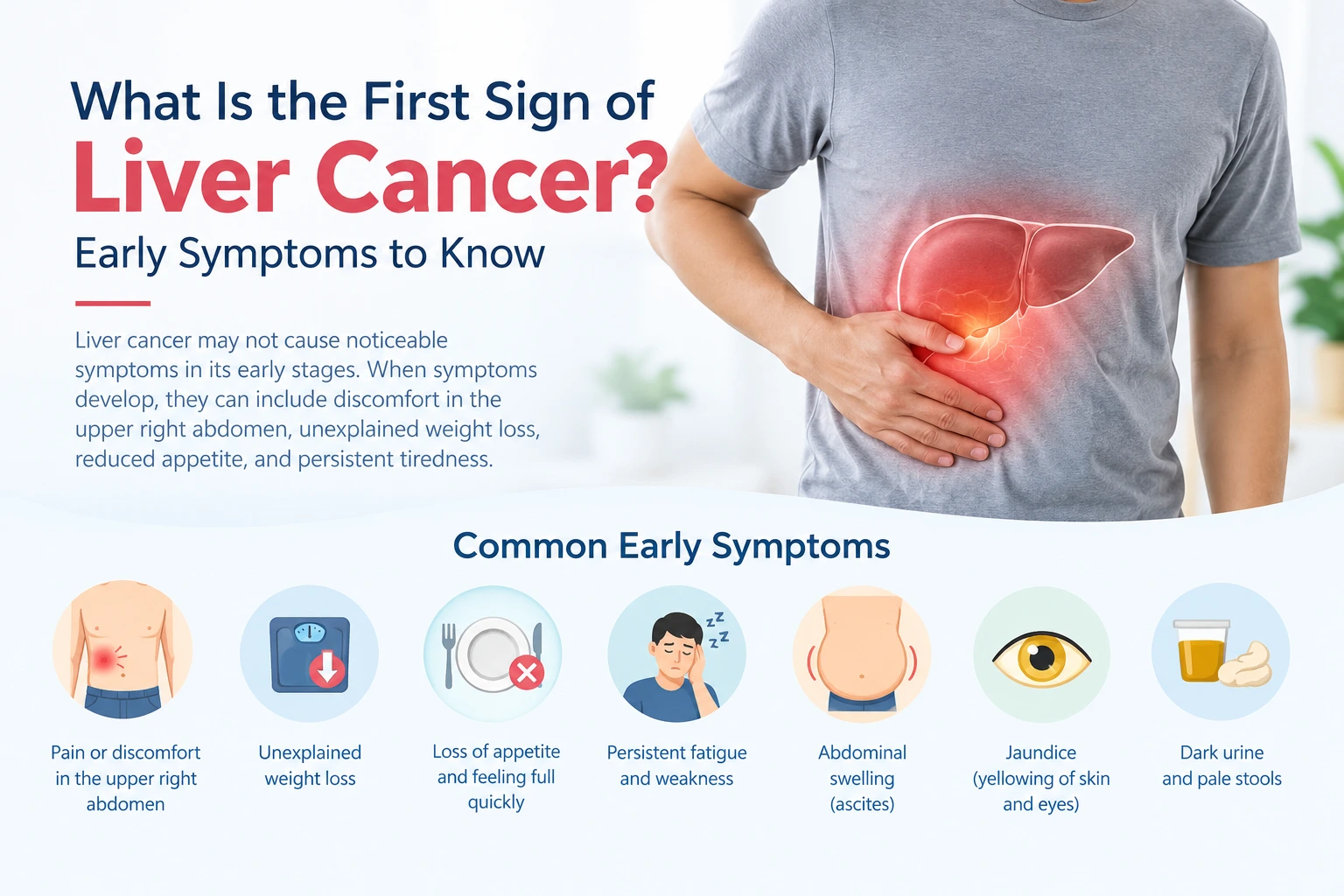
So, what is the first sign of liver cancer? There is no single first symptom that occurs in everyone. Some people may experience discomfort in the upper right side of the abdomen, unexplained weight loss, reduced appetite, or persistent tiredness. Others may not notice any changes until the disease progresses or is detected during investigations for an existing liver condition.
Understanding the possible symptoms, associated risk factors, and available diagnostic tests can help people make informed decisions about their health. Although these symptoms do not necessarily indicate cancer, persistent or unexplained changes should be assessed by a qualified healthcare professional.
What Is the First Sign of Liver Cancer?
The first sign of liver cancer varies depending on the individual and the stage of the disease. In many cases, early liver cancer causes no noticeable symptoms. When symptoms develop, they may include persistent discomfort in the upper right abdomen, unexplained weight loss, loss of appetite, or a feeling of fullness after eating small amounts of food.
These symptoms are not exclusive to liver cancer. They can also occur with fatty liver disease, gallbladder problems, digestive disorders, and other medical conditions.
People with cirrhosis, chronic hepatitis B, or chronic hepatitis C should be particularly attentive to changes in their health because these conditions can increase the risk of developing liver cancer. Regular medical follow-up may also help detect liver cancer before symptoms appear in certain high-risk individuals.
Early Symptoms of Liver Cancer
The following symptoms may occur in people with liver cancer. Their presence does not confirm cancer, but persistent symptoms deserve medical attention.
1. Pain or Discomfort in the Upper Right Abdomen
The liver is located in the upper right part of the abdomen, beneath the rib cage. Some people with liver cancer experience pain, pressure, or discomfort in this area.
The discomfort may develop when a tumour enlarges the liver or affects nearby tissues. It can be persistent or gradually become more noticeable.
However, right-sided abdominal pain can also result from gallstones, muscle strain, digestive problems, or other liver conditions. A medical assessment is necessary to identify the cause.
2. Unexplained Weight Loss
Losing weight without changing eating habits or physical activity can sometimes indicate an underlying medical condition.
In people with cancer, weight loss may be associated with reduced appetite, changes in metabolism, or the body’s response to the disease. Unexplained weight loss is not specific to liver cancer and can occur with several other conditions.
If weight loss continues without an identifiable reason, consult a healthcare professional.
3. Loss of Appetite and Feeling Full Quickly
Some people experience a reduced desire to eat or feel full after consuming only a small amount of food.
These changes may occur because of abdominal discomfort, an enlarged liver, fluid accumulation, or another underlying illness. When accompanied by unexplained weight loss or persistent abdominal symptoms, appetite changes should be evaluated.
4. Persistent Fatigue and Weakness
Unusual tiredness that does not improve with adequate rest may be another possible symptom of liver cancer.
Fatigue can occur for many reasons, including liver disease, anaemia, nutritional deficiencies, infections, and sleep disturbances. It is not a reliable indicator of cancer on its own.
Persistent fatigue that interferes with daily activities should be discussed with a doctor, particularly if other unexplained symptoms are present.
5. Abdominal Swelling
An increase in abdominal size may occur when fluid accumulates inside the abdomen. This condition is known as ascites.
Ascites can develop in people with advanced chronic liver disease and may also occur in liver cancer. Other medical conditions can cause abdominal swelling, so appropriate examination and investigations are required.
6. Jaundice
Jaundice causes the skin and whites of the eyes to appear yellow. It develops when bilirubin, a yellow substance produced during the breakdown of red blood cells, accumulates in the body.
Liver cancer may cause jaundice when liver function or bile flow is affected. However, hepatitis, gallstones, and other liver or bile duct conditions can also cause this symptom.
New-onset jaundice requires prompt medical evaluation and should not automatically be attributed to cancer.
7. Dark Urine and Pale Stools
Changes in urine and stool colour may occur when bilirubin processing or bile flow is affected.
Possible changes include:
- Urine that appears unusually dark.
- Stools that become pale or clay-coloured.
- Persistent itching, particularly when accompanied by jaundice.
These symptoms can have several causes and require appropriate medical assessment.
Common Symptoms of Liver Cancer at a Glance
Symptom | Possible explanation |
Upper right abdominal discomfort | Liver enlargement or another abdominal condition |
Unexplained weight loss | An underlying illness |
Loss of appetite | Digestive changes or systemic illness |
Persistent fatigue | Liver disease, anaemia, or other conditions |
Abdominal swelling | Fluid accumulation or another abdominal problem |
Jaundice | Increased bilirubin or impaired bile flow |
Dark urine and pale stools | Changes in bilirubin processing or bile flow |
Easy bruising or bleeding | Possible liver dysfunction or a bleeding disorder |
These symptoms do not confirm liver cancer. A diagnosis requires appropriate clinical assessment and investigations.
What Causes Liver Cancer?
The most common type of primary liver cancer in adults is hepatocellular carcinoma (HCC), which develops in liver cells called hepatocytes. Another type, intrahepatic cholangiocarcinoma, develops in the bile ducts within the liver.
Several factors may increase the risk of developing liver cancer.
Chronic Hepatitis B and Hepatitis C
Long-term infection with hepatitis B or hepatitis C can cause ongoing inflammation and damage to the liver. Over time, this damage may lead to cirrhosis and increase the risk of liver cancer.
Appropriate testing, medical monitoring, and treatment of chronic viral hepatitis can help reduce complications.
Cirrhosis of the Liver
Cirrhosis occurs when long-term liver damage causes scarring. It may result from chronic viral hepatitis, alcohol-related liver disease, and certain metabolic or other liver conditions.
People with cirrhosis have an increased risk of hepatocellular carcinoma and may need regular liver cancer surveillance.
Fatty Liver Disease
Metabolic dysfunction-associated steatotic liver disease (MASLD), previously commonly known as non-alcoholic fatty liver disease, involves excess fat accumulation in the liver.
In some people, the condition progresses to inflammation, scarring, and cirrhosis, increasing the risk of liver cancer. Liver cancer can also develop in some individuals with metabolic liver disease without established cirrhosis.
Heavy Alcohol Consumption
Long-term heavy alcohol consumption can damage liver cells and contribute to inflammation, scarring, and cirrhosis. These changes can increase the risk of liver cancer.
Reducing alcohol-related harm and seeking appropriate medical support can help protect liver health.
Other Risk Factors
Other factors associated with liver cancer include:
- Certain inherited metabolic disorders, such as hereditary haemochromatosis.
- Tobacco smoking.
- Exposure to aflatoxins, toxins produced by certain moulds that can contaminate improperly stored food.
- A history of chronic liver disease.
Having one or more risk factors does not mean that a person will necessarily develop liver cancer. The disease can also occur in people without recognised risk factors.
How Is Liver Cancer Diagnosed?
Symptoms alone cannot determine whether a person has liver cancer. A doctor may recommend investigations based on the person’s medical history, symptoms, physical examination, and risk factors.
1. Medical History and Physical Examination
The doctor may ask about abdominal discomfort, weight changes, appetite, previous liver disease, hepatitis infections, alcohol consumption, and other relevant medical history.
A physical examination may help identify abdominal swelling, an enlarged liver, jaundice, or other signs that require further investigation.
2. Blood Tests
Blood tests may include liver function tests, a complete blood count, and other investigations depending on the suspected cause.
An alpha-fetoprotein (AFP) blood test may also be used in selected situations. Elevated AFP levels can occur in liver cancer, but they may also occur in non-cancerous liver conditions. Some people with liver cancer have normal AFP levels.
Therefore, AFP testing cannot independently confirm or rule out liver cancer.
3. Ultrasound
An abdominal ultrasound uses sound waves to produce images of the liver. It can help identify abnormal areas, changes in liver structure, and findings that may require further investigation.
Ultrasound is also used for liver cancer surveillance in certain high-risk individuals.
4. CT Scan or MRI
Contrast-enhanced computed tomography (CT) or magnetic resonance imaging (MRI) can provide detailed information about a suspected liver lesion, including its size, location, and imaging characteristics.
These investigations help doctors assess whether a lesion has features suggestive of liver cancer and whether additional tests are necessary.
5. Liver Biopsy
In selected cases, a biopsy may be needed to examine a tissue sample under a microscope. However, a biopsy is not necessary in every case. Characteristic imaging findings, together with the person’s clinical background, may be sufficient to establish a diagnosis.
The appropriate diagnostic approach depends on the individual clinical situation.
Can Liver Cancer Be Detected Before Symptoms Appear?
Yes. In certain high-risk individuals, liver cancer can be detected through regular surveillance before noticeable symptoms develop.
People with cirrhosis and certain individuals with chronic hepatitis B may be advised to undergo periodic liver cancer surveillance. This commonly involves liver ultrasound, with AFP testing considered according to the clinical situation and applicable medical guidance.
The frequency and choice of tests depend on a person’s risk factors and medical history. A qualified healthcare professional can recommend an appropriate monitoring plan.
Routine liver cancer screening is not generally recommended for everyone at average risk. People with known chronic liver disease should discuss their individual risk and surveillance needs with their doctor.
When Should You Consult a Doctor?
Seek medical advice if you experience persistent or unexplained symptoms such as:
- Discomfort in the upper right abdomen.
- Unintentional weight loss.
- Ongoing loss of appetite.
- Persistent fatigue or weakness.
- Unusual abdominal swelling.
- Changes in urine or stool colour.
New-onset jaundice requires prompt medical assessment. Severe abdominal pain, vomiting blood, black tarry stools, fainting, or new confusion require emergency medical attention.
Do not wait for multiple symptoms to appear before seeking help. Timely assessment can help identify the cause and determine whether further investigations are needed.
Frequently Asked Questions About the First Sign of Liver Cancer
What is the first sign of liver cancer?
There is no single first sign of liver cancer. Early disease may cause no symptoms. When symptoms occur, they may include upper right abdominal discomfort, reduced appetite, unexplained weight loss, or persistent fatigue.
Can liver cancer develop without symptoms?
Yes. Liver cancer may remain asymptomatic during its early stages. Some cases are detected during surveillance or investigations for an existing liver condition before symptoms become noticeable.
Is right-sided abdominal pain always a sign of liver cancer?
No. Right-sided abdominal pain can result from several conditions, including gallbladder disease, digestive problems, muscle strain, and liver disorders. Persistent or worsening pain should be evaluated to determine its cause.
Does jaundice always mean liver cancer?
No. Jaundice can occur because of hepatitis, gallstones, bile duct obstruction, and other liver or blood-related conditions. Although it may occur in liver cancer, it is not specific to the disease and requires medical evaluation.
Who has a higher risk of liver cancer?
People with cirrhosis, chronic hepatitis B or C, and certain other chronic liver conditions have a higher risk. Heavy alcohol consumption and some metabolic liver diseases may also contribute to risk.
Which tests can detect liver cancer early?
For selected high-risk individuals, liver ultrasound surveillance, sometimes combined with AFP blood testing, may help detect liver cancer before symptoms appear. CT and MRI scans may be used to investigate suspicious findings.
Can normal liver function tests rule out liver cancer?
No. Liver function tests assess aspects of liver health but cannot independently rule out liver cancer. A doctor may recommend imaging or other investigations if symptoms or risk factors warrant further evaluation.
Conclusion
The first sign of liver cancer is not the same for everyone, and some people experience no noticeable symptoms during the early stages. Upper right abdominal discomfort, unexplained weight loss, reduced appetite, fatigue, jaundice, and abdominal swelling are possible warning signs, but they can also occur with other medical conditions.
Recognising persistent changes and seeking timely medical evaluation are important steps. People with chronic hepatitis, cirrhosis, or other significant liver disease should discuss their individual risk and whether regular liver cancer surveillance is appropriate.
Medical assessment and appropriate investigations can help identify liver problems and guide the next steps according to each person’s condition.
Medical Disclaimer: This article is intended for general educational purposes and does not replace professional medical advice, diagnosis, or treatment. Symptoms and test results should be interpreted by a qualified healthcare professional. Consult your treating doctor if you have concerns about your liver health.
Contact Details:
Dr. Sachin Trivedi
Oncologist in Mumbai | Cancer specialist in Mumbai
Address: Bldg No. 38, N S Patkar Marg, opp. Westside, Babulnath, Dadi Sheth Wadi, Gamdevi, Mumbai, Maharashtra 400007
Phone: 83696 95209
Website: drsachintrivedi.com